






- Resources
- Election Hub
- Amici Curiae | State Election Board Rules and Certification
Amici Curiae | State Election Board Rules and Certification
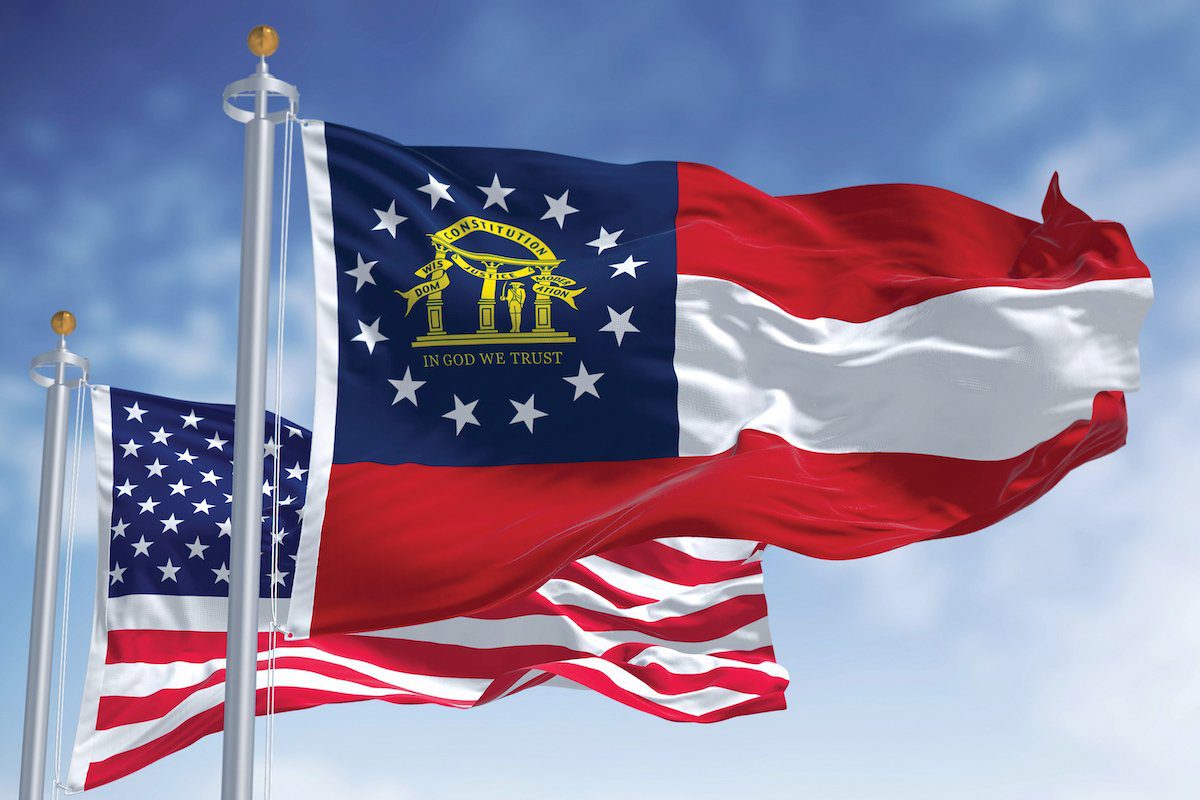
Public Rights Project – on behalf of 48 Georgia legislators – filed an amicus brief to request that the Fulton County Superior Court reject last-minute rules passed by the Georgia’s State Election Board (SEB) in Abhiraman, et. al. v. the State Election Board.
The first rule seeks to redefine the state’s election certification process to require county boards to conduct a “reasonable inquiry” before attesting that the results are a true and accurate accounting of all votes cast in the election. The Election Board’s second rule requires that county boards make available to any board member for examination “all election related documentation created during the conduct of elections prior to certification of results.”
Georgia law gives the courts, not election officials, the power to adjudicate election challenges. By purporting to give election officials broad authority to investigate the conduct of elections, the new rules invite obstruction and disruption of the democratic process. The brief argues that it is the mandatory duty of officials to certify the election results. Georgia courts have long characterized certification as a ministerial (non-discretionary) duty, and the text of Georgia’s statutes makes clear that even if “error or fraud is discovered,” the election returns must still be certified and the error or fraud should be reported to the district attorney to be addressed in court.
Over the past several decades, the Georgia General Assembly has enacted several amendments to the certification process, carving out limited and narrow contexts where election officials may correct results. These provisions allow officials to correct errors relating to mathematical discrepancies, and or ordering recounts and recanvassing. But as the brief argues, the General Assembly’s decision to enact only these narrow mechanisms for election officials to correct errors strongly implies that election officials lack discretion to engage in free-ranging inquiry prior to certification.
Finally, the brief highlights how the new rules pose a risk to voters or candidates who have legitimate election fraud claims. There is a limited amount of time to challenge an election in court, and it can only be done after certification is complete. A long delay could prevent courts from playing their statutorily defined role in responding to election disputes.
-
 Election Hub11/6/2024
Post-Election Statement from the CEO
With the election decided, I want to recognize what a devastating result this is for…
-
Election Hub11/1/2024
Understanding the Latest Challenges to Elections in Battleground States
A staggering three-quarters of Americans say they’ve seen inaccurate news about the 2024 election “at…
-
Election Hub10/31/2024
Amici Curiae | Provisional Ballots to Correct Mail-in Ballot Defects
Public Rights Project – on behalf of a coalition of Pennsylvania county commissioners, councilmembers, and…


