
$20 million for safer streets: why Boston is challenging a grant cancellation in the courts

High crash rates, a lack of shade canopy, late-running buses, and poor air quality: improvements to the often-congested arteries of Melnea Cass Boulevard, Malcolm X Boulevard, and Warren Street have been long overdue.
That’s why the city of Boston spent years developing ways to revamp them — consulting local leaders from each street, drawing up plans, and more. The resulting Roxbury Resilient Transportation Corridors project included a variety of improvements. Safer sidewalks. Better public transport. Separated bike facilities. Improved intersections. And infrastructure to address stormwater and flooding. To carry it out, the city was awarded a $20 million federal grant under the RAISE (Rebuilding American Infrastructure with Sustainability and Equity) program.
But in September 2025, the city received a letter from the U.S. Department of Transportation (DOT) saying that the federal government was going to withdraw the funding.
The reason? The electric vehicle (EV) charging infrastructure included in the project conflicted with the administration’s stated priority of “prioritizing traditional forms of energy.”
For Boston, this came out of the blue. To start, DOT doesn’t have the authority to override Congress’s requirement that these awards support environmental sustainability, just because it’s offside with the current administration’s political agenda. That’s not to mention that the EV chargers amounted to far less than even 1% of total funding. The city didn’t even get a chance to remove it from the grant for reconsideration.
Now Boston is suing the federal government.
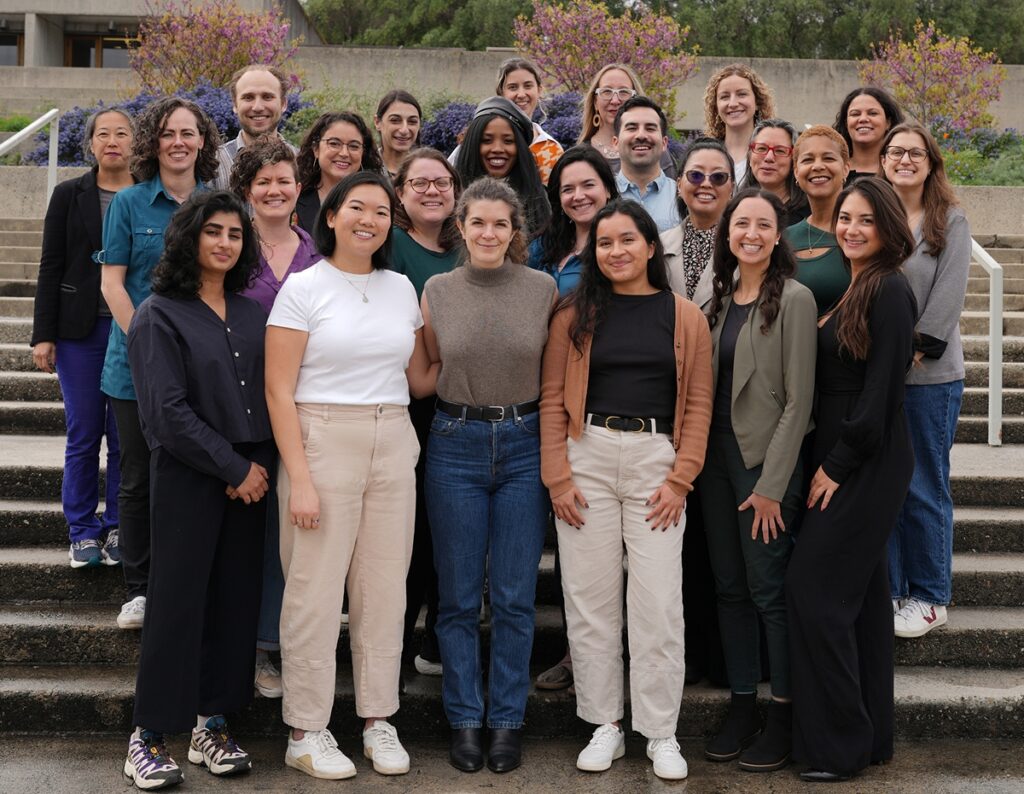
Two attorneys on this case are part of Public Rights Project’s 2026 cohort of Affirmative Leaders Fellows, local government attorneys from across the country who are actively building their skills in affirmative litigation.
Attorney Megan Corrigan, a Boston area native, started working in the City of Boston Law Department as policy counsel in November. While city planners tried to work out a compromise with DOT, she kept track of a case brought by Albuquerque last year after a similar grant award was withdrawn there. That case survived the federal government’s attempt to have it dismissed — and Boston saw the opportunity to bring its own suit.
Megan is now leading the city’s legal challenge in partnership with Public Rights Project.
–
“I worked in big law and knew I wanted to go into government. With the new Trump administration, I felt called to this opportunity to go back to public service. Being able to lead a case is a great opportunity. It is an absurd grant withdrawal and such a worthy project.”
— Boston Policy Counsel Megan Corrigan
–
The case is part of a full docket for the city. Earlier this year, Boston’s legal team celebrated a victory when it successfully moved to dismiss the Department of Justice’s complaint against Boston’s Trust Act, a local policy that limits civil cooperation with federal immigration agents. (The government appealed the ruling, and Boston is now continuing to partner with Public Rights Project to defend Boston’s position in federal court.)
Tom Broom, senior assistant corporation counsel at the city, was part of Boston’s legal team on the Trust Act case and is also now supporting its lawsuit against DOT. Having defended dozens of cases in pursuit of Boston’s interests in affordable housing, public safety, land use, taxation, and more, it’s clear to him that these cases point to an important aspect of local government power.
–
“In defending the Trust Act and pursuing action against DOT, I have seen firsthand that municipalities can play a crucial role in supporting the rule of law. They can act as a crucial bulwark against actions that harm their citizens often simply by using the authority lawfully at their disposal.”
— Boston Senior Assistant Corporation Counsel Tom Broom
–
The high-traffic thoroughfares affected by Boston’s RAISE grant are critical in a neighborhood that locals cherish for its rich culture.
Throughout history, Roxbury has been home to a diverse array of communities looking for a new start: from Irish immigrants escaping the potato famine to Latvian and Jewish immigrants looking to build an American dream, and African Americans taking part in the Second Great Migration from the Jim Crow South. Roxbury today is known as the heart of Black culture in Boston and New England.
Roxbury has a vibrant past — and it deserves a vibrant future. The federal government’s political grandstanding shouldn’t stand in the way of long-overdue safety, affordability, and quality-of-life investments this community and many others are counting on. It’s now up to cities like Boston to bring the challenge to court so this isn’t the case.

-
 Blog10/29/2026
U.S. vs. California: a court ruling that sends a strong message
Two rulings that rebuked the federal government, from two different courts, in three days. On…
-
Blog10/15/2026
A sheriff tried to put an election on trial. The California Supreme Court said no
The request came from Attorney General Rob Bonta, whose office wanted time to review the…
-
Blog9/28/2026
Meet our Election Protection Hub director!
Jenny Holmes’ career has been focused on making life more fair and affordable for historically…